
Beyond the Value Mirage: How Procurement Earns Influence and Drives Enterprise Value
In Part I of this two-part Procurement Pathways series, host Stacy Joslin spoke with Omid Ghamami, President of the Procurement and Supply Chain Management Institute, and Darshan Deshmukh, President of ProcureAbility, about one of procurement's most persistent myths: that most value is created at the negotiation table.
Now, in Part II, they turn to a different challenge. If procurement creates value, why do business stakeholders still hesitate to engage it early? Too often, procurement leads with policies, procedures, and compliance, creating the perception of a gatekeeper rather than a business enabler. Changing that perception requires procurement to understand stakeholders’ strategies, objectives, and challenges, then demonstrate how it can help them achieve better business outcomes.
The conversation goes beyond stakeholder engagement to examine several factors that continue to limit procurement's influence. Omid and Darshan explore a critical capability gap, as procurement has spent decades learning how to negotiate externally but far less time learning how to influence internally, where money isn't the primary lever. They also challenge the profession's reliance on savings as its primary measure of success, arguing that business leaders are increasingly focused on growth, risk, and performance outcomes. From there, the discussion turns to AI, where they caution against using technology as a shortcut to better results. Instead, they argue that organizations must first address underlying process challenges before determining where AI can create meaningful value.
Key insights for procurement leaders include:
- Why business stakeholders engage procurement late, and what it takes to become a partner they actively want to involve early.
- Why internal influence requires different skills than supplier negotiation, and how business understanding builds credibility.
- How procurement can move beyond savings metrics to demonstrate enterprise advantage through business performance, growth, risk reduction, and supply chain agility.
- Why AI amplifies the processes behind it, and why organizations need to redesign work before automating it.
- Why procurement earns a “seat at the table” when business stakeholders advocate for its value, not simply when procurement asks for one.
About our guests:
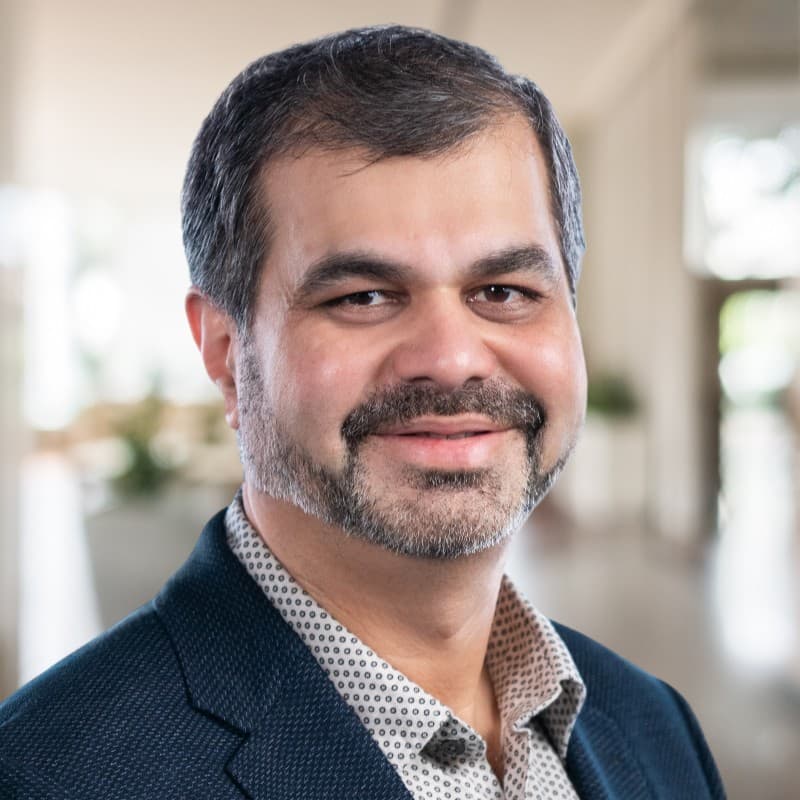
President, ProcureAbility
Darshan Deshmukh has extensive global operations and delivery experience in the managed services and advisory fields. He has deep expertise in building global programs focused on procurement, strategic sourcing, category management, and supply chain/procurement transformation.
Prior to joining ProcureAbility, Darshan spent most of his career building large-scale, global delivery operations. He spent a decade in a series of global leadership positions in IBM’s Integrated Supply Chain organization and then joined Denali Sourcing Services as operations leader and was instrumental in establishing and growing the company’s global delivery capability. After Denali’s acquisition integration with WNS, Darshan transitioned to tech start-ups, OpenGov and Icertis, where he built their global professional services and customer success organizations. Darshan has worked with global clients in high-tech, financial services, manufacturing, retail, utilities, and healthcare/pharma.
Darshan holds an undergraduate degree in Mechanical Engineering, a graduate degree in supply chain from Penn State, and an MBA from MIT Sloan School of Management. He loves international travel, movies, and everything food, and divides his time between Seattle and Palm Springs.
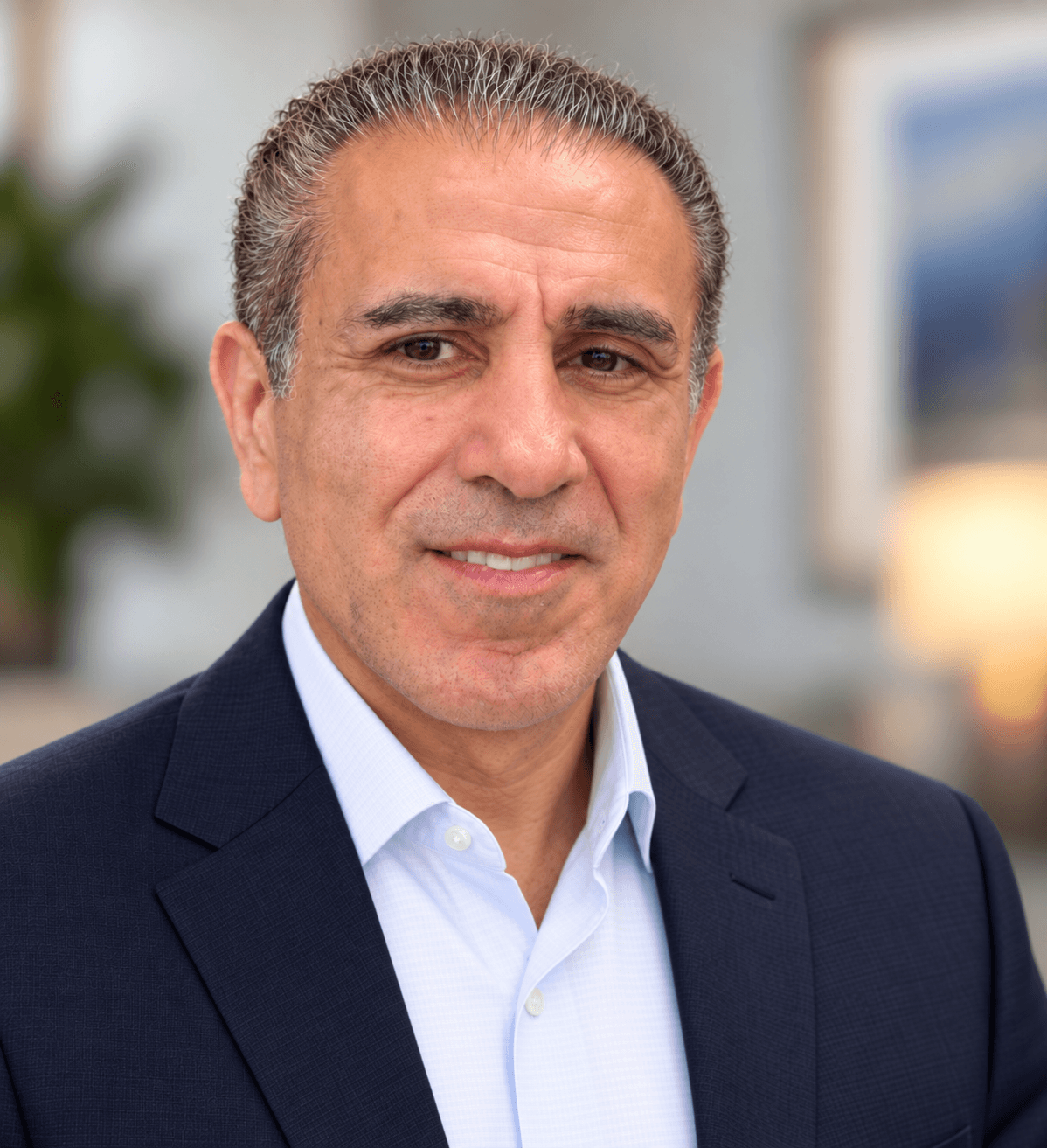
President, Procurement and Supply Chain Management (PSCM) Institute
Omid Ghamami, MBA, CPSCM™ is a global procurement strategist, speaker, and consultant with 18 years of experience at Intel Corporation, where he led Intel’s Global Corporate Purchasing Operations organization with a $16 billion scope.
Since 2012, Omid has been recognized as a global thought leader in procurement, supply chain, and negotiations. He has worked in 31 countries and has had nearly half of the Fortune 100 as clients through training or consulting engagements, as well as the 50 CPOs of the U.S. Author of two best-selling procurement books, he has published numerous articles in leading industry journals, and has been featured in both Fortune Magazine and The Economist for his insights on Fortune 500 procurement strategies. He has received more than a dozen industry awards recognizing him as a leading global thought leader in procurement and supply chain.
Omid holds an MBA from the University of California, where he served as class president. He founded the Certified Purchasing and Supply Chain Manager (CPSCM™) program and is President of the Procurement and Supply Chain Management (PSCM) Institute.
Read the transcriptHide the transcript
This transcript was generated automatically and may contain errors.
Speaker 1[0:06]Welcome to Procurability's Procurement Pathways, a journey into the dynamic world of procurement told through the voices of its most trusted leaders. Here, every story, every lesson, and every hard-won insight reveals how personal passion fuels professional impact, and how those moments taken together shape the future of our field. In part two of this special two-part series, we're joined by Omid Gamami, president of the Procurement and Supply Chain Management Institute, and Darshan Dishmook, Procurability President, to discuss why procurement still struggles for influence and how to earn it.
Speaker 1[0:44]Omid Darshan, welcome back to the podcast. I'm very excited to have the second part of our conversation around procurement value and why our value is hiding in plain sight. And today we'll talk all about why we still struggle for influence and how to earn that influence. So let me start here. If we know as a procurement organization how to create value, why do business units still try to avoid us?
Speaker 1[1:16]This has been happening for as long as I can remember being in procurement, and it's still a theme over and over again. Why is that?
Speaker 0[1:23]Well, I'll jump in here, Stacey, and thanks for having me again. Um I'll start with a a painful truth. The the reason business units don't engage us early is because they don't see the value of engaging us early. If they saw the value, we're talking about perception, wild horses couldn't stop them from engaging us early. So we just need to embrace that this is their perception.
Speaker 0[1:50]And what's happened is we're confusing control with value creation. So control to me is kind of an extrinsic motivator. You know, you need to have policy compliance, you need to adhere to our guidelines, we need to put this out to bid. The issue is that the value, now I'm speaking from the perspective of end users. The value we create benefits procurement and doesn't benefit them.
Speaker 0[2:18]That's how they see it. Uh the shift we need to make is to start engaging business units on what's valuable to them. And if you think about it, you know, you're sitting at home and somebody knocks at your door and tries to sell you something, nobody likes that because they're focusing on what's in it for them. They're not focusing on what's in it for you.
Speaker 0[2:41]Procurement has the risk of coming across like a salesperson because we're focused on we need to get savings, we need to comply with bid policies, we need to comply. But we already talked about how important it is to articulate demand in terms of cost and in terms of performance results. We need to be reading business units' status reports, sitting in their divisional update meetings, understanding their strategies and challenges.
Speaker 0[3:05]Then when they come to us with the scope of work and spec, then we say, listen, I can I know you're in a huge rush. I can rush this, I can expedite it through the system. We can get this out tomorrow. But guess what's going to happen? You're going to have all the same problems you're having today with your other suppliers.
Speaker 0[3:23]And I know what your business unit is struggling with. It's struggling with X, Y, and Z, and I know what you're trying to accomplish. I'd like to take the time to re-articulate this to better enable your business unit objectives, to better achieve, you know, to solve these problems, to prevent all these fires. Because by the way, when procurement is spending time firefighting with suppliers, they're never alone.
Speaker 0[3:45]The end user is always there in those meetings. And so they're firefighting too, distracting from their day job. So it's this focus, it's really the takeaway is stop having a visible focus on policies and procedures in front of end users. Instead, have a visible focus on what the end user is trying to accomplish. And if you do that, then they figure out this person's here for my interests.
Speaker 0[4:15]They're here to help me get better and to help me achieve better results. Um, if I can give you an example, the best one I can think of. Um Mercedes-Benz was one of my clients, and they did something so cool. They had procurement and engineering reporting to the same person, and then that person gave them a set of shared metrics.
Speaker 0[4:40]So procurement was responsible for engineering objectives as well as their own, and vice versa. As a consequence of this, they drove so many breakthroughs in procurement engineering designs and things like this that they could have never done otherwise. It was just a thing of beauty, and I was so impressed with it. The real shift we need to make in our mind is how do we create a model where business units engage procurement, not because they have to, but because they want to.
Speaker 2[5:14]Those are amazing examples that Amit Omit just shared. Like when I extrapolate this to like why does this happen, right? One of the things, the one of the biggest mistakes that we do in this is really we start with the process to have a conversation. So this is the procurement process, this is the compliance that you need to do, and uh this is my policy, and you must do this otherwise, right?
Speaker 2[5:38]That if that's if that's the approach that we we start with, uh you already created this confrontational relationship with the business. That's number one. And then number two is like, okay, you just made yourself feel like a red tape as compared to actual enabler for the business, right?
Speaker 1[5:56]Yeah.
Speaker 2[5:57]Um, so with this is like we need to think about that. Like, how do you message your contribution to the business? That's number one. Number two is why you exist, you exist to enable the business, not necessarily to save dollars. Um, yes, saving dollars is part of it, but it's really, are you doing the right thing for the business?
Speaker 2[6:20]I think that's the type of conversation that we need to have. And I think my recommendation is always create a path of least resistance for business to engage with you and not have a bunch of processes just for the sake of processes. And if they if the business feels like, oh, I just have another form to fill in to engage with the procurement, now you just created a natural barrier for entry as part of now.
Speaker 2[6:45]I I get the certain discipline part of the conversation, but I think it needs to be as easy as possible to engage with you. And I think that's the key part. It's I know it sounds simple, but I think once we get into over-engineering our own process, I think it starts becoming very difficult for the business to engage with you, right?
Speaker 2[7:04]So that's number one. And number two, I think is another big challenge is does your business partner or a stakeholder see you as a capable partner? Means do you understand their business? Like going back to Omi's point, did you did you actually read their business reports? Do you really can you actually articulate, do you understand their business, right, as part of your conversation?
Speaker 2[7:28]And or they're going to see us as paper pushers and just kind of following the process as part of the um part of that conversation. So it's important that we are able to talk the talk about business. Well, it's important that we know their business. It's important we articulate how we can help them achieve their overall objectives so that they can guess get us involved early in the process in the planning cycle, making sure that we stay ahead of the requirements as that that conversation matures.
Speaker 2[7:57]Um I think another a lot of us fail in gaining that credibility when we put that process hat on.
Speaker 1[8:05]Yeah.
Speaker 2[8:06]So I think it's important that we kind of keep these couple of things in mind on how we design the process and how we get ourselves ready to have those conversations with the key stakeholders as well.
Speaker 0[8:18]I think uh if I could just jump in here, I think one uh sort of cold hard fact we need to embrace that'll make us better is to just accept that nobody cares about our policies and procedures. And every and nothing good happens by bringing it up. Nothing good happens. And so you should comply with policies and procedures.
Speaker 0[8:41]Just don't talk about them with end users. When you sit down with an end user, you have to create a perceptual shift that this person, being procurement, does not have an allegiance to policies and procedures. They have an allegiance to my business unit strategy, my business unit objectives, and my business unit challenges and helping me get better.
Speaker 0[9:04]And once you do that enough times, they'll figure out this person's here to enable my business unit. I need to engage them early. The minute you talk about policies, procedures, requirements, and so forth, they're gonna completely tune out and say, there they go again, focusing on their own best interests. They're not here to help me. I need to engage them as late as possible.
Speaker 1[9:26]Does the construct of some procurement organizations make difficult the growth of those relationships with the business? I've heard this conversation at conferences before that our key performance metrics as procurement aren't matched with driving the business's value. So if we're being evaluated by a set of standards that don't include the business's purview, then that's that's problematic.
Speaker 0[9:57]You're absolutely right. So we don't really have metrics on supplier performance management and things like this. We have it, but it doesn't get rolled up in performance reviews. It's everybody knows the primary metric is cost savings. Um, and so I think that's true. I think the construct um it makes it difficult. But there's another problem that really nobody's talking about, which is procurement.
Speaker 0[10:26]Isn't it funny that we're so good at extern negotiating externally, but we're so bad at negotiating internally? And I've deduced the reason is we've only learned how to negotiate with money involved. We've we've never learned how to negotiate with, I mean, anybody can say, here's $10 million, what will you do for me? But we've never learned how to influence.
Speaker 0[10:51]And influence to me doesn't involve money. We've learned how to negotiate, we've not learned how to influence. That's the critical missing skill that nobody's getting trained on and nobody's recognizing. That we try to use the same skills that we use with money externally. We try and apply those same skills internally, and it doesn't work because A, nobody has to listen to you.
Speaker 0[11:18]B, you don't have money. You can't say, here's $10 million, will you engage me early? Um, and so there's a whole different set of skills that we we haven't learned, we don't practice, we aren't being taught. Um, I think that's a big issue too.
Speaker 1[11:33]Yeah. And that also goes back to talent. What what what is the talent that we're hiring that the procurement leadership is hiring? What what are their skill sets? Is it the negotiation or is that influencing the what we call the soft skills, the the subject matter expertise?
Speaker 2[11:49]Absolutely. And I think if we extrapolate that to incentives drive behavior as well, right? So we need to also critically retool how we set the objectives for the team. So, example, like a couple examples that come to mind, right? So if you're a SRM supply relationship manager for a key supply relationship, the goal for that role is really making sure that both of you jointly are successful.
Speaker 2[12:19]So having a savings target for that supplier is not necessarily the right metric for them. The goal is really how did you grow this relationship further or reduce this relationship depending on whatever the business priority is, right? So that's the goal is really are you spent it's counterintuitive, is are you actually increasing the spend with the supplier or are you actually reducing the spend with the supplier as an SRM?
Speaker 2[12:44]So if you are a supplier relationship manager with a key supplier relationship, you should be incentive to grow that relationship in the most effective way.
Speaker 2[12:53]If the business is growing, then that relationship should continue to grow. But if your focus is on about how what is my cost saving against this supplier, that's not the right thought process in how you drive that conversation, right? So that's number one. Number two is if you are in a business partner role, like capturing the requirements with the stakeholders.
Speaker 2[13:14]Um, going back to uh Omit's point, like if your focus is all about savings, and if the business partner says, like, I yeah, you that's your metric, I don't see that in my business. I just use it for something else, right? Um so how do you interlog financially interlog in the annual or a quarterly uh financial process where your contributions are captured as part of the business unit objective?
Speaker 2[13:41]And and that could be as simple as I contributed X million dollars towards your business that you used it for something else. That's absolutely fine. It may not show up in your ABIT conversation, but it's really how do you enable that business further? And can you actually have that conversation? So going back to Omi's point is this is a very different negotiation than talking about dollars and science, right?
Speaker 2[14:05]It's really, are you sharing your value with the stakeholders in the most effective way? That does not necessarily mean it's always dollars negotiations. It could be what's your value to the business as well.
Speaker 1[14:17]100%. Well said. I'd like to switch gears a little bit. I feel like anytime I talk about AI, I need to take a deep breath first. So moving into the conversation of the AI illusion. You cannot have a conversation of procurement right now for a day without talking about AI in some way, shape, or form or multiple ways, shapes, and forms.
Speaker 1[14:40]What are we all getting wrong in all of these conversations that we're having?
Speaker 0[14:46]So I'll jump in here. One of the things I'm seeing over and over is actually a lot of AI implementation failures. Um and it, you know, if if if I just go down memory lane for a second, back in the 80s, you know, PCs came out and people thought, um consumers and businesses thought, all we have to do is buy computers and then all the problems will be solved.
Speaker 0[15:10]And then what they found out was, okay, this hardware is here, but I have to do something with it and I have to be productive with it. It's not going to do it on its own. And I'm kind of seeing that happen again with AI. And there's sort of two problems going on concurrently, at least. The first problem, you know, if I give you an analogy, if you have a recipe for a completely inedible cake that just tastes awful, and your solution is to put a delicious frosting on on top.
Speaker 0[15:42]Um, I've got news for you, people still aren't going to eat that cake. It's going straight to the compost bin. And the issue is we're doing that with AI, is we're taking bad processes, and then we're layering an AI frosting on top and saying, okay, this is going to solve the problems. But AI doesn't automatically enable your business model.
Speaker 0[16:09]What it actually does is it exposes it. And what happens is if you automate a bad process, all you've done is automate dysfunction. And so we really need to be re-architecting things from the ground up. And and then weaving AI, not putting AI on top, but weaving it into the DNA of how the business gets done. That's the first issue.
Speaker 0[16:39]The second one is uh a lot of companies and then uh and then therefore businesses that are buying these softwares are moving towards uh independent AI agents for everything and the creation of you know dozens and dozens of different types of agents. And while this sounds good on paper, it's it's the same as you know, you have a large household and everybody has their own refrigerator and everybody has their own everything.
Speaker 0[17:10]Pretty soon, you know, it sounded good on paper, but pretty soon it's out of control. You create um you create orchestration issues, you create governance issues, and you create sort of agent debt, meaning that now you're experiencing at first it was good, now you're experiencing death by agents. And they're independently acting. You have a an entire auditorium full of musicians, but you still don't have an orchestra.
Speaker 0[17:37]Um and so that's a good analogy. Uh agentic AI gone wild, um, as opposed to having a central nervous system uh driven by agentic AI, is I think a second uh big problem that we're facing. And so just just buying an AI software and implementing it is is is not going to do it at all.
Speaker 2[18:03]Yeah, I mean that's that's that's a great point. I mean, I mean it's it's one of the biggest challenges most organizations kind of struggle with is they start with technology. They don't necessarily start with the problem statement, and then there is a favorite technology that you're trying to build the solution around, and and then that becomes kind of just the pilots after pilots, right?
Speaker 2[18:23]And not necessarily like a full-scale implementation of the solution to a problem. I think I strongly believe in like a human-centered AI framework to make that successful. So there should be a more structured arg design, work design approach to solving this uh problem statement. Like we need to look at, like it's almost like a four-pronged approach. We need to first figure out what is the work that needs to get done, then what are the outcomes that you're trying to accomplish, what are the jobs associated with that uh kind of uh outcome that you're uh targeting, and what are the subtasks associated with that.
Speaker 2[19:05]Right? So those are kind of the building blocks of that problem statement. And then once you figure that out, you figure it out like what skills do you need, what sort of technology you need, how AI can help, where human needs to be part of it. So then you can integrate all these elements of the solution development as part of that work design.
Speaker 2[19:25]And when you put that through that framework and come up with what ins and outs are, I think your success probability will go up significantly. Versus starting with a use case and then trying to fit around the technology, because I think that's what most organizations try to do. And then it's always like dead by agents, the I I like that term.
Speaker 2[19:47]You're gonna end up with like a bunch of these where you're not getting the outcome that you're looking for from a from an overall implementation perspective.
Speaker 0[19:55]Absolutely.
Speaker 1[19:56]And as you're saying that, it it doesn't s it doesn't sound dissimilar to what we were talking about in part one around suppliers and supplier management. It's understanding what that what the business requirements are, what the actual need is before you solve it. And I love that that uh image, Omit, of the the room full of musicians, but there's no orchestra.
Speaker 1[20:20]You need to be able to be the conductor, the maestro. You have to have some kind of maestro to say, okay, what are all these tools going to do? It doesn't even get into the quality of each tool. You know, that's a whole other conversation.
Speaker 0[20:30]That's right. Absolutely. So it's kind of the takeaway is AI doesn't isn't uh it's not like watering a plant. You know, it's it doesn't you you add AI, it doesn't just automatically fix broken procurement. And it's it's an amplifier, it's not a cure. So you can make it your best friend, but you can also make it, you know, um, I won't say your worst enemy, but but just a uh fair weather friend, let's say.
Speaker 0[20:59]Or you can make it a problem uh within the enterprise. And so it's doing it right, re-architecting your business processes, weaving uh uh AI into the DNA of a highly effective business process, and then having agentic AI as a part of the central nervous system of that process instead of uh AI agents gone wild.
Speaker 1[21:24]Right on. Moving away from AI to the seat at the table. So we kind of we kind of jumped around a little bit in this in this part two, uh, talking a little bit about stakeholder engagement and some of the the continuing, persisting limitations around that, moving into AI. And I'd love to go back and talk about being at the table.
Speaker 1[21:47]For as long as I've been procure in procurement, one of the big goals is to have a seat at the stakeholder table, at the business leadership table. And we've already always heard if we save money, we'll have a seat at the table, but that's not been the case. Why hasn't that happened?
Speaker 0[22:06]Well, there's, you know, a really simple reason why, in my mind. So you have, you know, this this Fortune 50 company. They uh achieve $150 million in savings over the course of a year, and they roll that up to the CEO, CFO, COO. And these people say, wow, $150 million, that's fantastic. Where's this money? We could use it right away.
Speaker 0[22:31]Well, um, you see, it's we kind of gave it back to the business units. Well, what'd they do with it? Um they they spent it. So then this money doesn't actually, you know, I'm talking about how they the C-suite sees it. This is monopoly money. It doesn't even exist. It's not sitting anywhere. They can't go and apply it to EBIT.
Speaker 0[22:52]They can't there's nothing that can be done. The money does not exist. And uh it's it's no surprise that many times you see procurement reporting up into the C-suite, six months later they're no longer reporting there because they don't know how to manage dysfunction. They don't understand these phantom savings that keep coming up. And then you result in this situation where they want procurement to be like payroll, which they want it to just work.
Speaker 0[23:22]Because if you look at it, the only time the C-suite hears about procurement today is when there's something wrong. There's a supply critical supplier that hasn't delivered the supply chain's not working whatever it is. Same thing with payroll the only time they hear about payroll is when people aren't getting paid or they're not getting paid the right amount.
Speaker 0[23:41]And so they start to view us as this back office cost center that's supposed to just keep the business running. And if you hear about something it means they screwed something up. And so uh we have to stop sort of looking at cost savings that's our metric but the the C-suite doesn't view it the same way. We need to start looking at enterprise advantage.
Speaker 0[24:08]We need to position ourselves as a source of enterprise advantage. And that comes from everything we've been talking about most notably how have we enabled the business units to run better with better performance outcomes with greater supply chain agility surgically removing costs from the equation and you know I I've I've been provocative so far I'll continue to be provocative.
Speaker 0[24:34]I think sometime in the future the CFO needs to get a slice of all cost savings that are achieved and it needs to go to a central fund. And from that fund maybe they start using it for employee-facing initiatives or to drive it as contributions to EBIT something that that makes the procurement impact more visible and then the business units need to get rewarded for how much they contribute to those things vis-a-vis savings.
Speaker 0[25:06]That gets us to the Mercedes-Benz model where we're sharing um I would say sharing metrics that is I would say that the other thing that we don't do well again is something people are not talking about we're the worst marketers inside the entire company and we we're we're very comfortable sitting in the back office and generating great results but as far as telling the broader employee base inside the whole company here's the things that we've done here's the value we've added we just don't do that.
Speaker 0[25:42]Who does it well it if you want to copy somebody copy HR HR has constantly got posters emails open forums you can't go to the cafeteria without those tabletop tents saying something um HR does a wonderful job of talking about the different initiatives and so forth and what they're doing to make your life better. Procurement doesn't do any of that.
Speaker 0[26:06]And so it goes back to the influence model. You have to keep your product on the shelf visible in front of people we need to have somebody inside procurement who's responsible only for internal influence and marketing for you know if you will product positioning and to help change employee perception about the value that's being driven. So anyways these are some of the things I think we need to start doing differently but if we keep doing what we've always been doing with shoving cost savings upstream phantom cost savings we'll keep getting what we've always been getting which is being denied a seat at the table.
Speaker 2[26:48]Yeah but I I think those are amazing points omid like one of the things that kind of comes to mind is if you think about last 20 years of conversations with the CPOs and the procurement leaders for the first 10 years I would say a lot of the conversations were around efficiency, effectiveness along with the sales right like how do I do the cheaper, faster, better right everything that I'm kind of working on.
Speaker 2[27:14]A lot of conversations in recent years it's really how do I enable more revenue? How do I reduce risk? Yeah how do I continue to contribute towards ESG goals as part of the organization. And those are the things that are top of mind for the CEO. And when you have those conversations you are already kind of that first step is successful in how you're going to transition your organization to more of that in quote seat of the seat at the table as as part of your overall next journey as an organization.
Speaker 2[27:50]I think the the focus and and some of it is how you do it, right? As as going back to Omet's point, like we're the worst marketers if if you walk into a stakeholder room and say I'm procurement I'm here to help and here is my policy and process you're not going to get anything from that conversation.
Speaker 2[28:10]I think the conversation needs to be let's have a conversation about what you need from me to make your job better, right? As part of the that initial conversation if you have that conversation I think you're going to go somewhere. That first line where like you start with a policy and a process it's not going anywhere. It's going to stay within the within the zone that that we are in and and being able to drive that value conversation how do you how can you help them make them successful is the key part of that next stage in conversation so that you can you can be at the seat at the table and drive valuable conversation.
Speaker 0[28:49]And you have to evolve procurement has to evolve with the business and I'll just say this it's we're not going to get the seat at the table from from continuous by continually asking for it. It has to be business units that push for it. They have to keep telling the C-suite how valuable procurement is and that is where the message is going to come from it's not going to come from us selling it uphill it's going to be the business units saying listen these guys are adding tremendous value they're enabling our results that's when we're going to be invited to sit at the table well said.
Speaker 1[29:31]Gentlemen I would like to wrap up this uh second part of our conversation with the lightning round are we ready for the lightning round okay so I've got one question for each of you and then the last question I'll ask to both of you we kind of end our our Pathways podcast with with a lightning round question.
Speaker 2[29:50]So it's a little bit different for this scenario but question for you Darshan in one sentence what must procurement become over the next five years well in one sentence that's going to be maybe two. I'll do in one sentence that's fine I'll I'll try to be the consultant procurement must evolve to collaborative and relationship focused organization that is maniacally focused on value-based ecosystems with their business partners and suppliers through human-centric relationship with technology and digital fluency.
Speaker 0[30:32]That's a fantastic sentence thank you omen your question what capability will separate elite procurement organizations from everyone else well you know it's going to be kind of a a summary of what we covered but we have to be able to be creators of enterprise advantage we have to be able to surgically remove costs acquire performance results instead of goods and services drive these investigative negotiations and value creation instead of you know the way we've been doing it today and then we have to be able to re-architect how the business of procurement gets done instead of automating dysfunction and for you both between now and 2030 by 2030 what myth should procurement retire forever?
Speaker 1[31:28]Darshan I'll go to you first.
Speaker 2[31:32]I think the myth that we need to retire forever is we are here for compliance and cost savings. I think that's that we have to get out get it out of the system.
Speaker 2[31:50]We are here to enable the business I think that's the um the first myth that we always have like we need to drive cost savings and compliance for the organization that I I would say we we have to retire that myth.
Speaker 0[32:03]Yeah agreed Amit well I'll just pick one very uh basic item but it would be my dream is that I'd like to retire the myth that most cost savings are found in at-the-table negotiations with suppliers. I I think that's absolutely false and for the 32 years I've been in the profession that's been the overwhelming perspective is let's go extract savings from the suppliers parasitically and you know we'll hammer them and um learn how to get an unfair advantage in negotiations and so forth.
Speaker 0[32:42]And it's just not where the money is and I kind of want to do an infomercial you know telling people this is not where the money is guys. So that's the myth I'd like to retire forever.
Speaker 1[32:55]I hear that so for either of you are there any closing thoughts you'd like to share with our audience before we wrap I'll dive in here I'll just say at the table negotiations matter.
Speaker 0[33:09]Driving procurement policy compliance matters having AI strategies matter cost savings matter but none of these are the future the way we've been doing it today. The future we want to aspire for is to become a value added center of profit that creates enterprise advantage. And if we can do that right then we'll get off the menu for lunch with the C-suite and we'll be offered a seat at the table.
Speaker 2[33:37]I I couldn't say that better omit so I'm I'm just gonna basically say our focus should be all about partnering with our stakeholders and understanding their business and then working with our extended suppliers and supply chain to drive that value thank you both so much it's been a wonderful conversation I appreciate your time thank you so much for having us for more than 30 years procurability has been the leading provider of procurement and supply chain services delivering best in class advisory managed services digital and talent solutions across industries global organizations trust us to transform their procurement operations drive growth and reimagine what's possible to receive our latest thought leadership subscribe to Procurability's insights at procurability.com slash insights