
The Value Mirage: Why Procurement Keeps Looking in the Wrong Place
In Part I of this two-part Procurement Pathways series, host Stacy Joslin sits down with Omid Ghamami, President of the Procurement and Supply Chain Management Institute, and Darshan Deshmukh, President of ProcureAbility. Together, they challenge one of procurement's biggest misconceptions: that negotiation creates most of the value.
Drawing on decades of procurement leadership experience, Omid and Darshan explore why many organizations focus on savings only after costs have already been embedded in the business. They examine how procurement teams can create greater impact by shaping requirements, reducing complexity, and aligning more closely with business objectives long before supplier negotiations begin.
Throughout the conversation, they discuss the hidden costs of over-engineered specifications, excessive customization, and outdated procurement practices. They also challenge traditional zero-sum negotiation approaches, arguing that stronger collaboration with suppliers and stakeholders can unlock greater value for all parties involved.
Key insights for procurement leaders include:
- Why the greatest opportunities for value creation exist before negotiations begin.
- How complexity, over-specification, and poor demand definition increase costs and reduce efficiency.
- Why procurement teams should challenge requirements, not just supplier pricing.
- How collaborative supplier relationships can create value beyond traditional negotiations.
Listen to Stacy, Omid, and Darshan as they share practical ways to unlock more value. Along the way, they discuss how better demand planning, stronger supplier partnerships, and a focus on outcomes can improve procurement performance.
To continue the conversation, explore our Procurement Reality Check: 6 Myths Holding Procurement Back and the True Drivers of Enterprise Value infographic, developed in partnership with Omid Ghamami. We challenge long-held beliefs about procurement value creation, negotiation strategies, supplier management, and strategic procurement, which are explored in detail throughout this episode.
About our guests:
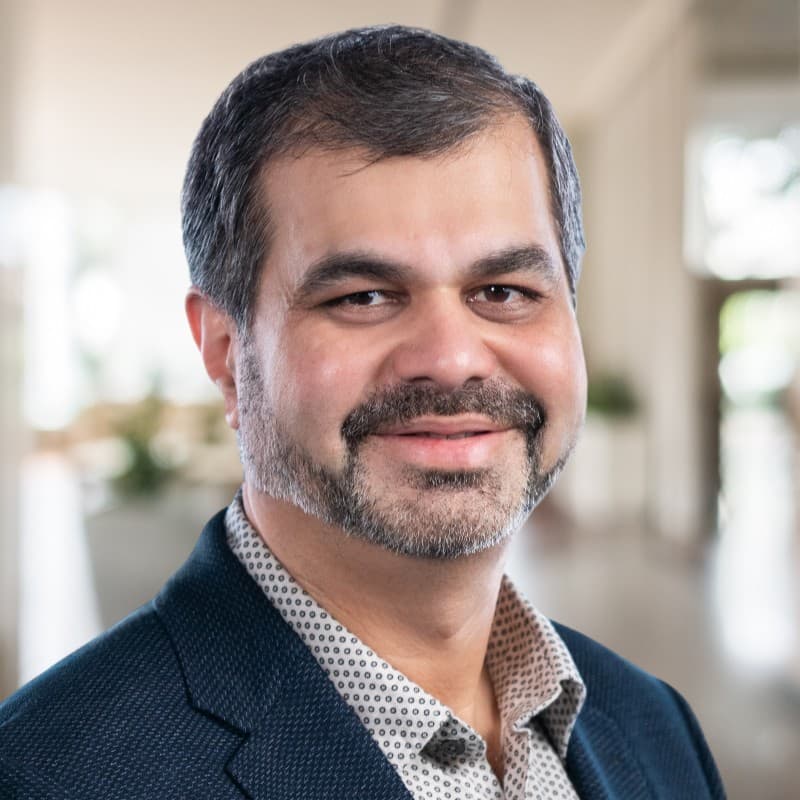
President, ProcureAbility
Darshan Deshmukh has extensive global operations and delivery experience in the managed services and advisory fields. He has deep expertise in building global programs focused on procurement, strategic sourcing, category management, and supply chain/procurement transformation.
Prior to joining ProcureAbility, Darshan spent most of his career building large-scale, global delivery operations. He spent a decade in a series of global leadership positions in IBM’s Integrated Supply Chain organization and then joined Denali Sourcing Services as operations leader and was instrumental in establishing and growing the company’s global delivery capability. After Denali’s acquisition integration with WNS, Darshan transitioned to tech start-ups, OpenGov and Icertis, where he built their global professional services and customer success organizations. Darshan has worked with global clients in high-tech, financial services, manufacturing, retail, utilities, and healthcare/pharma.
Darshan holds an undergraduate degree in Mechanical Engineering, a graduate degree in supply chain from Penn State, and an MBA from MIT Sloan School of Management. He loves international travel, movies, and everything food, and divides his time between Seattle and Palm Springs
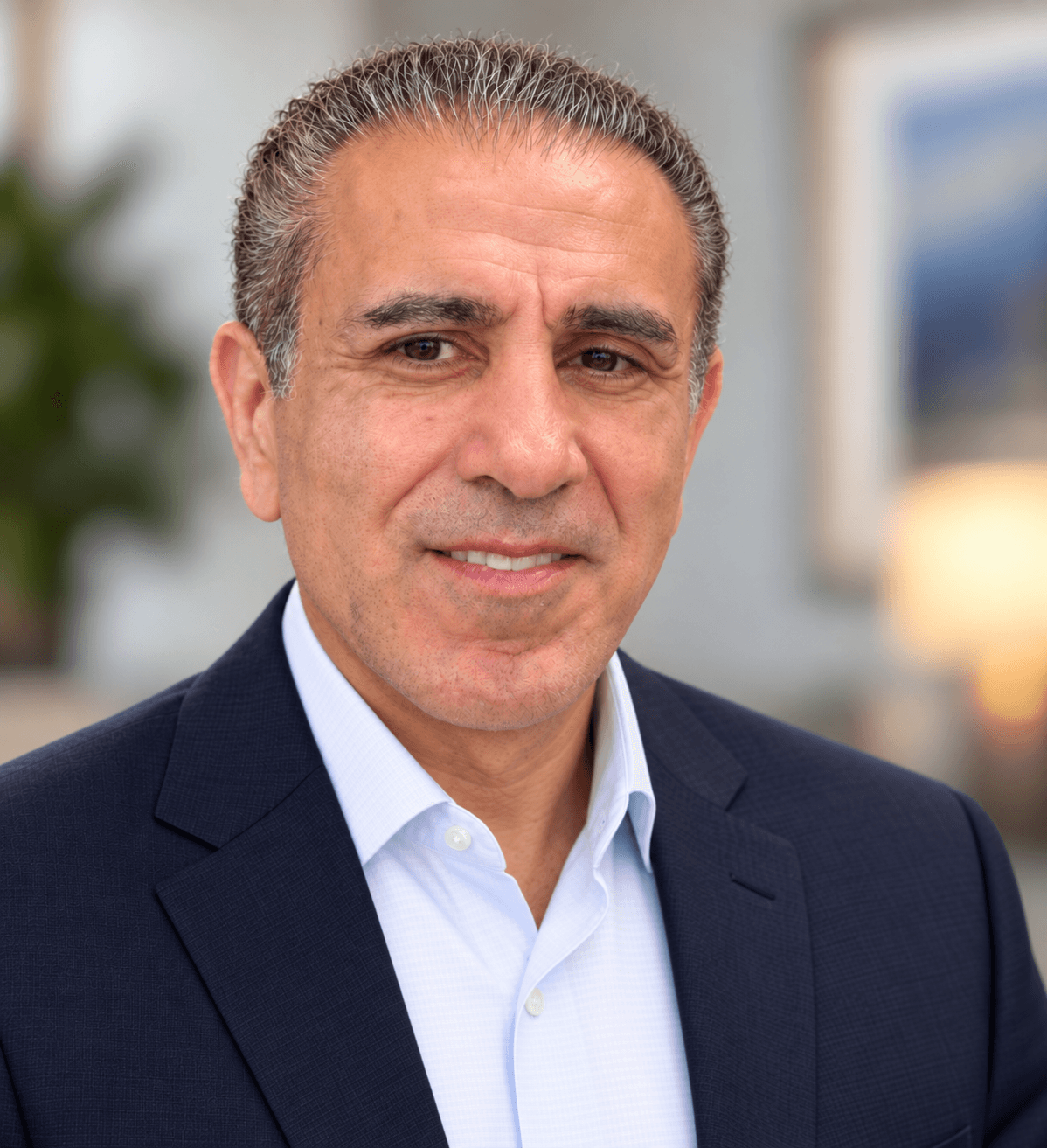
President, Procurement and Supply Chain Management (PSCM) Institute
Omid Ghamami, MBA, CPSCM™ is a global procurement strategist, speaker, and consultant with 18 years of experience at Intel Corporation, where he led Intel’s Global Corporate Purchasing Operations organization with a $16 billion scope.
Since 2012, Omid has been recognized as a global thought leader in procurement, supply chain, and negotiations. He has worked in 31 countries and has had nearly half of the Fortune 100 as clients through training or consulting engagements, as well as the 50 CPOs of the U.S. Author of two best-selling procurement books, he has published numerous articles in leading industry journals, and has been featured in both Fortune Magazine and The Economist for his insights on Fortune 500 procurement strategies. He has received more than a dozen industry awards recognizing him as a leading global thought leader in procurement and supply chain.
Omid holds an MBA from the University of California, where he served as class president. He founded the Certified Purchasing and Supply Chain Manager (CPSCM™) program and is President of the Procurement and Supply Chain Management (PSCM) Institute.
Read the transcriptHide the transcript
This transcript was generated automatically and may contain errors.
Speaker 2[0:06]Welcome to Procurability's Procurement Pathways. A journey into the dynamic world of procurement told through the voices of its most trusted leaders. Here, every story, every lesson, and every hard-won insight reveals how personal passion fuels professional impact, and how those moments taken together shape the future of our field. In part one of this special two-part series, we're joined by Omid Gamami, president of the Procurement and Supply Chain Management Institute, and Procurability President Darshan Dishmook, as they discuss why procurement keeps chasing value in the wrong places.
Speaker 2[0:42]Thank you so much, Omid and Darshan, for your time today. Looking forward to this conversation.
Speaker 0[0:47]My pleasure. Happy to be here. Happy to be here, Stacy.
Speaker 2[0:51]So let's start talking about value. This part one of our podcast talks about why procurement keeps chasing value in the wrong places. So I think we can all agree as procurement professionals that procurement's overall goal is to create value. But having said that, in your minds, what is the biggest misconception that procurement leaders today share as to how that value is created?
Speaker 0[1:19]Well, I can start here. It's in my mind, you know, our profession is sort of obsessed with negotiations. It's the most exciting part of the process. And there's this idea that all the value is going to be derived from there, from supplier interactions at the table. And we'll talk about parasitic negotiations later, but we're really optimizing the wrong end of the procurement process.
Speaker 0[1:44]If you look at the money, the performance results, business unit alignments, supplier management strategies, all of these happen before we ever engage in supplier negotiations. And we're trying to extract these most of the times in the wrong places.
Speaker 1[2:00]Yeah, and I think traditionally procurement was at the receiving end of the process. Like most of the requirements are shared when they're fully baked or already at the late stage in the process. And then somebody will come to you and say, okay, I need help in sourcing this or procuring this. I already have everything kind of baked in as part of the requirement.
Speaker 1[2:23]So sometimes over-engineered, sometimes special considerations were set in such a way that you can only work with a certain supplier. Or in general, it's really, we were not at the forefront of defining what the value is for the business. So the easiest way to really capture that was to kind of say, okay, I'm going to add the value through driving compliance and then driving uh saving.
Speaker 1[2:48]So Omin's point, like focus hardcore negotiations, making sure that you save the dollars for the stakeholders, and that's where the focus has been, versus having a conversation about what is the true value for you, uh stake, Mr. Steak, Mr. or Mrs. Stakeholder, as part of your uh conversation. And we never really got that chance as part of that traditional org structure because when the purchase acquisition comes in, a lot of that work is already done, and it was always kind of part of release resistance.
Speaker 1[3:19]I'm just gonna spend my energy on negotiating with the supplier and driving the compliance for the organization.
Speaker 0[3:25]And Stacy, it's I think it's helpful to just quickly note how we got here. We all landed in this profession by accident. Procurement is the only profession on earth that's completely comprised of people who didn't plan to be in it. We have no standards board. Um, and we have a culture where you know the savings targets are driving our performance reviews.
Speaker 0[3:49]And then most of the training I've seen that's out there is still derived from theories and concepts that were developed and popularized in the 1950s. And so really the biggest problems, the biggest opportunities are all before you ever sit at the table with the supplier, but we're trying to solve it at the table and afterwards. And so we're still trying to solve yesterday's problems instead of redesigning tomorrow's.
Speaker 2[4:16]And I think that's a great point. As we've done this podcast, so many of the guests have talked to the fact that they began their career in X and landed in procurement, or they studied Y and landed in procurement. So when that is not your educational background, what you work in within an organization really speaks to what you think procurement is.
Speaker 2[4:40]And also, I I've heard a lot in the past, I only have access to this part of the function. I'm only given access to the pricing and these these things. All these other areas of value generation are not something that my stakeholders are enabling me to be part of.
Speaker 1[5:00]And I think when it comes to some of it is how the function was set up, but some of it is also what this is the box that is given to you as part of the process. Can you actually go outside of that box to collaborate with the stakeholders and also with the suppliers to drive that? And we'll talk a lot more about that in today's conversation.
Speaker 1[5:19]But I think traditionally, people, okay, this is the process that you're going to work in. And all of us kind of stayed within that box, and it was kind of hard to kind of get out of that box and things are changing, but I think it's still one of those areas where we focus on still age-old uh savings targets as part of the conversation, which I think the train has left the station as part of that conversation.
Speaker 2[5:45]Exactly. Exactly. So let's go, let's talk about costs. We've talked about the fact that um negotiation is still seen as that large lever. Why are companies so comfortable debating price, but not really challenging other requirements that are part of that underlying process?
Speaker 0[6:04]Well, here's the thing, Stacy, is procurement in my experience, uh, you know, we're we're running sort of a relay race with a baton. And we're asking the end user, did you are you done with the scope of work or spec yet? Are you done with it? And then the minute they give it to us, yes, I'm done with it, then we grab it and run.
Speaker 0[6:23]Um and implicit in that is you're assuming that what they just gave you is the truth, is the best way to characterize the demand. Well said. Um none of uh end users don't have a bachelor's degree in end userism. No, nobody had training in how to do this. And so um not only do they create performance problems with how they uh articulate the scope of work and spec, but they also create cost problems.
Speaker 0[6:53]And you know, at my institute, what we've uncovered with our Fortune 500 clients is that on average, 18% um unnecessary cost is baked into complex scope of works and specs. 18%. And people are not getting that amount of money in in negotiations. Um, and so these costs, once you in the relay race, once you take that baton and run, then you've hard-coded that 18% and you'll never get rid of it.
Speaker 0[7:23]The best case scenario is you negotiate a discount off of 18% that should have never been there. Um perhaps I can share an example uh with you with the United States Air Force. They have a janitorial contract that's obviously massive. Chat GPT estimates it's over a hundred million dollars. Um they for years and years, for decades, had a requirement that all hard floors must be stripped and rewaxed weekly.
Speaker 0[7:56]Um, well, it turns out that's like washing your car six times a day. It it's it's stripping and rewaxing weekly is not an outcome, it's an activity. And uh somebody finally got smart and said, listen, what is it we're trying to accomplish? And they looked at it and they and they rewrote it. Instead of being an RFQ, they rewrote it as an RFP.
Speaker 0[8:19]And the RFP said that all floors must have a clean, uniform, shiny appearance, free of scuff marks and dirt. Just that change in the scope of work with suppliers resulted in a 50% discount. And more importantly, nobody could tell the difference. The floors looked just as nice, and so there it was, you know, just it was unnecessary to strip and rewax weekly, and that's what caused this problem.
Speaker 0[8:53]And it turns out, if you're interested, that scope of that requirement started because it used to be a punishment for the soldiers. They would, whoever got in trouble had to strip and rewax the floors, and that punishment took place weekly. Then somehow that turned into a janitorial um requirement when the Air Force got more friend friendly with its employees.
Speaker 1[9:17]And when I think about the organizations and how the stakeholder alignment changed in the last 10 to 15 years. So if I if I look back at my career, like maybe like around 20 years ago, uh I was part of a very progressive procurement organization, but even that was mostly focused on source selection and fair value. Means a request will come in and the procurement will focus on figuring out whether it's the right supplier for the organization and are you getting a fair value for it.
Speaker 1[9:51]So it's savings, basically, focus on savings. It was less about staying ahead of the curve, uh figuring out the planning process for next year, like the whole interlock around the category planning was still a little bit behind at that point of time. And and uh as the function matured, I think it's starting to get into that uh type of mindset where you are focusing on the business outcome versus where it's like Omi's point around like, do you really need this?
Speaker 1[10:18]Or is it just like nobody questioned whether you need it or not? Right. So there are a couple of examples that come to mind. Um like one of my early career jobs was a procurement and materials manager in manufacturing. I was responsible for procuring it, production control, and inventory management afterwards, right? After every quarter, so the first before the end of the quarter, all the focus will be about saving money, getting the parts in, making sure that they are at the right place at the right time, and after the end of the quarter, getting beaten up for having too much inventory, right?
Speaker 1[10:55]So that was kind of the part of the job. Um and and this was like some one of my first jobs. So like the guidance I got is I'll give you a simple advice. You're not gonna get fired for having too much. But you will get fired if you are run out of parts. So your incentive is basically just having everything that is available and just cap it, right?
Speaker 1[11:21]We used to have 21 different types of memories that went into the product. Uh, with the supply-demand planning, the way as good as it's gonna go, you have the variability with 21 memories, and everybody said, Oh, our customers need this variability and they want to have a choice, and you would end up with hundred plus million dollars of inventory at the end of the quarter because you just want, you just had so much variability and design um over engineering as part of the process.
Speaker 1[11:51]Uh, nobody questioned that, right? Over the period of time, we got into more lean design, making sure that there are only four or five types of memories, and then your inventory kind of structure kind of went down. But nobody questioned, does your consumer truly need 21 different types of memories, right? That was kind of part of the uh conversation.
Speaker 1[12:09]And uh, I I look back as like as a procurement and uh materials manager, I was fully incented to just have anything and everything that is available because I was not gonna run out of parts. I think that was kind of the motivation there, right? Another one that kind of comes to mind as an example is um when I I was responsible for a professional services category, which was a very large category for uh my organization.
Speaker 1[12:35]We had around 8,000 suppliers with 2100 job roles and skill sets. Wow. This was a professional services organization, so the complexities were high. I I get that. But but do we really need 2100 job roles and skill sets or are we overspecing this? Um and and when when we started the project, like that was the first question, right?
Speaker 1[13:01]And and it took us two years of stakeholder alignment to kind of figure it out how much of this is really needed for your delivery versus are we are we just created this uh monstrosity of complexity uh as part of your overall process. We're able to take it down to by around 60%. So like 2100 jobs went down, uh job roles and skill sets went down by 60%, and then the supplier base went from around 8,000 suppliers to 1,800.
Speaker 1[13:29]But it took us two years to drive that consensus. But this was procurement-led conversation with the stakeholders because having that conversation ahead of time instead of just spending focusing your time on negotiating with the suppliers drove a very structural change in how we run a category.
Speaker 2[13:48]Yeah, yeah. It reminds me of the complexity within the pharma space. And I remember working in an agencies category at one point with one pharma company, and not only did every brand have their own creative agency, every indication within that brand had its own agency. So you had this huge tree and nobody was speaking to each other, which gets into that underlying process.
Speaker 2[14:14]So you've got the cost, you've got the to, as you've both very well said, what is the need versus the want? What do we actually need here? What's the what are we expressing as the need and then the process to do that? So there's so much involved there.
Speaker 1[14:28]And then I think if Stacey, if you think about the agency example that you used, how many times have you heard from the CMO office that this is creative work? You're only gonna get a fixed price or a blended rate, and never had the split off, the types of jobs and type of work that needs to get done, right?
Speaker 1[14:45]That was always part of the conversation. And then you overspec it as part of the conversation. But new, as a procurement uh professional, you have to actually figure out and be able to have that dialogue around what your business is and having that systematic split-off roles so that you can have a good dialogue with the supplier and drive that conversation.
Speaker 0[15:06]I think it's helpful just to say how do these things happen. And in my experience, it happens from six different things end users do. One is they over-engineer what they're putting together, and that can happen, all of these can happen with goods or services. Um, one of the biggest ones, number two, is they customize the demand when they could have used something standard.
Speaker 0[15:30]And that's because they take so much pride in their work and and they could have just used a standard solution. Uh, the third one is just an overly complex design. It could be much simpler than how they designed it. The next one is they have unnecessary bells and whistles. The next one happens less often, but I still see it, which is gold plating, trying to make it look pretty, whatever it is.
Speaker 0[15:52]And then finally, perhaps the most interesting one is solving the problem with the wrong solution. So it technically works, but that's not how you should have solved the problem. And so, in summary, from my end, I think there's a couple of key messages. One is let's shatter the myth that most savings come from negotiations. I don't think they do.
Speaker 0[16:12]I think the most savings, we should still, you know, go and negotiate, but most savings come from the streamlining of cost in the demand. And I think the other message for me is, you know, when you're hammering a supplier for a discount, um, you're going to um you're you'll never have an eager dance partner. But when you're driving costs out of the equation, it's not at the expense of the supplier.
Speaker 0[16:37]And they may even help you. You can have an eager dance partner in this process.
Speaker 2[16:41]Absolutely. And sometimes suppliers, especially in companies where there is more of a turnover, suppliers have a little bit more history with the company than some of the internal procurement colleagues. And so they really understand what's going on, where the gaps are, process um can be a big one. Hey, if you if you just make your scope or your uh your your scope of work a little bit more detailed, we wouldn't have all of these issues with with the end product at the end of the day, right?
Speaker 1[17:10]So yeah, I think that that kind of gives me like a I was looking at like historical example that comes to mind is we are we were working with a supplier where uh this was packaging category. Uh we had around 63 SKUs, different types of boxes. They're all printed in different color, different branding, like depending on what the um what the brand was.
Speaker 1[17:33]And there were like 14 different types of boxes, but the the they were printed with different material, right? And then the box would come in, and then we're trying to reduce the cost. And then the supplier said, supplier came back and said, let's just work together to solve this. And we're able to take those 63 SQUs down to basically a handful of SKUs, and then the supplier put in the printing uh materials basically at the end of the assembly line so that you can print whatever the uh optimized way of printing is at the end of it, rather than having all these multiple SKUs to start the process itself.
Speaker 1[18:08]Right. So back to Omit's point, is like it's like you you are solving the problem in the right way, versus you're starting with the wrong problem statement, and you're never going to get to the uh answer that you're looking for.
Speaker 2[18:22]Absolutely. Absolutely. That said, we can talk about value creation in terms of all of these things we talked about, process and requirements and wants versus needs. But at the end of the day, negotiation is still a large part of procurement's role. I I'd love to dive into that concept a little bit or that topic. Are most procurement organizations negotiating in a in a best in class way, or no, and why?
Speaker 0[18:56]I'll start here. I would say, I would say definitely not. Um we're getting better and better at doing what we've always been doing, but there's opportunities to do new things. And probably the biggest issue is we've been taking sort of this zero-sum game approach. And it's what I call parasitic negotiations, is what we've been taught, which means you know, you go to the table and say, give me a better discount, better lead time, better warranty.
Speaker 0[19:23]It's parasitic because one party can only gain expense, can only gain at the expense of the other party. Um and the breakthrough here is investigative negotiations and value creation. And I don't see this being practiced very often, almost never, in procurement. And it entails finding out what keeps the supplier awake at night. That's the investigative negotiations piece.
Speaker 0[19:54]Uh and once you understand that, then you really earn your paycheck by inventing options to help them solve those problems. But we don't do it for charitable purposes, we exchange it for uh negotiation concessions, usually for a steep discount. And that's the value creation part. And so perhaps it's helpful if I share a story. One of my uh clients was a potato chip manufacturer, and they were struggling because all of the potato farmers wanted to increase prices, and this was creating way too much cost pressure, and they wanted help.
Speaker 0[20:34]And so we looked at it and we decided to do investigative negotiations and we started to research and we found out what had to be keeping the potato farmers awake at night was they only harvested one month a year, which was August, but then they had to sell 12 months a year. So if you can imagine carrying 12 months of inventory of your product 100% of the time, and so I asked my client, can these guys have a shoulder cold storage problem?
Speaker 0[21:01]Can you shift cold storage to your facility? They say, Yes, we we have room for that. So we had them go back and make the offer to shift cold storage to their facility. Now, what pricing would they be willing to offer? These same farmers that all wanted the price increase, on average, agreed to a 20% price decrease because a huge monkey was a gorilla was taken off their back, in fact, and their life was made so much easier.
Speaker 0[21:31]And if you can imagine suppliers being thrilled to cut costs instead of increasing prices, it's it's truly a win win situation. And it's a great example of making the pie bigger uh for both parties. That's a great example.
Speaker 1[21:49]Yeah I mean it's that's uh that's an amazing story. I mean, um I mean when I think about um like you talked about zero sum game, right? We still see a lot of Procurement professionals using that as a negotiation tactic as part of their day-to-day practice. And I was just reflecting on like I'm going to use an example.
Speaker 1[22:11]Me as a supplier, so I worked with a product company where we're implementing software with a Fortune 5 customer. They were notorious for basically having a culture of this zero-sum game. Every meeting was this nightmare going into the meeting.
Speaker 1[22:30]We used to have a weekly call, and you would have these five or six procurement senior people on the call. And my job for a year was basically just getting beaten up every week for every feature that was not going well, right? That was kind of the approach. And I would, I remember, like the night before, like for a couple hours, the only thing that I used to do is how I'm going to defend every point of view to prove them wrong.
Speaker 1[22:58]And that's a waste of time just from a kind of as a partner, right? If you think about it. This is not, yeah, like you're focusing your energy on how I'm going to not lose to the other party versus how I'm going to jointly win, right? That's a terrible relationship. I always say, like, I said, like, if somebody is willing to pay double than what my market value is, if they are the customer, I do not want to work for the company because it it was a nightmare as a relationship as a supplier and a customer, right?
Speaker 1[23:30]So I think I want to kind of take it back to that other end of the extreme, not in a good way. Um our uh parent company, J Bel, our chief supply chain officer, has this kind of strategy/slash model. Um treat your suppliers like you would treat your customers. And the messaging is it's it's not that you want to be soft in negotiations, but going back to Omit's point, that you want to have a willing partner at dance is somebody that is working with you to solve your problems, whether it's upside or downside in the business.
Speaker 1[24:08]So, example that uh Frank always uses our chief supply officer is um when we have material shortages, especially in the EMS space, having a partner or a supplier that you have worked with day in, day out, where they are considered true partner, they are willing to bend backwards to give you what you're looking for just from allocations and all the other things that come with it.
Speaker 1[24:31]Right. So I think for us, when you think about negotiations, I think keeping that mindset is like, would you uh would you be able to go to a stage where you can treat your supplier like you would treat your customer from a relationship and a partnership perspective, you're gonna drive a significant value from that kind of extended relationship that you might have with the supplier.
Speaker 2[24:54]Absolutely. And I think that came through during COVID a lot.
Speaker 1[24:57]Yeah.
Speaker 2[24:57]Where, you know, there were there were some needs that a lot of companies had, some very unique needs with their supplier partners. And if it was a partnership, you saw that come through. And if it wasn't, you saw that come through as well.
Speaker 0[25:09]You know, um I I think the the big behavioral change that needs to happen is procurement needs to stop sticking to what's on the quotation. Because if you stay there, you're just going to talk about price, warranty, quality, lead time, customer service, inventory, and investigate value creation never happens as a consequence of that. You have to start doing things like reading interviews with their executives or watching interviews, reading their proxies and their financials, read what the analysts are saying, and also ask the suppliers.
Speaker 0[25:44]Just what's the biggest thorn in your side? What's causing you the biggest problems? Maybe they're trying to instantiate a new technology, maybe they're trying to break into a new geography, into a new industry. Maybe one of their products is not selling. Maybe, you know, and you you just have to go through all of these and find out what I can do to potentially help solve this problem.
Speaker 0[26:04]And I'll say it again, that's where you earn your paycheck. Um, not just sticking to what's on the quotation. That's far too inside the box. And so we say win-win all the time, it's become trite. It's not win-win until you've made the pie bigger, is my perspective. Um, and that's the challenge here is to put more on the table.
Speaker 0[26:27]And so it's not uh we need to stop asking ourselves how do I exert more pressure and leverage against suppliers to get what I want. But the real question is, how can I make this a better deal for the suppliers in return for improving my positions? And that is a huge challenge we need to get better about at.
Speaker 2[26:51]Yeah, agree. Understanding insight, right? And that brings the value.
Speaker 0[26:56]Absolutely.
Speaker 2[26:57]Yeah. Staying with that topic of supplier relationship management, sometimes organizations talk about SRM supplier management, meaning that post-contractual relationship piece. Why is that potentially a dangerous way to think?
Speaker 0[27:17]Uh it's it's really dangerous because by the time the contract is signed, all the damage is done. 100% of the damage is done. And I'll I'll share something that I don't think you're gonna hear anybody else, but I'll debate this with anyone. The number one problem in procurement today is that all of our processes, procedures, documents, forms, systems, guidelines, and templates are geared towards the acquisition of goods and services instead of performance results.
Speaker 0[27:50]And the trickle down from that is that you have suppliers that perform poorly and then a procurement workforce that spends 70 to 90 percent of every day in firefighting activities. Wow. We are not a procurement profession. We we all work for the fire department. And it for everybody listening here, go back and ask your employees what percentage of your day are you spending in unplanned activities?
Speaker 0[28:18]The answer will be 70 to 90 percent. And if you root cause it, it it comes back to this issue. And so if I can give you an example, I was asked by a newspaper in San Francisco to analyze a contract. I'm not gonna state the name of it, but it was a school district in Northern California, a very large one.
Speaker 0[28:39]They wanted to implement a payroll software, and they had a $9.5 million budget to do that. I read the whole contract, it was over 50 pages, and it detailed every single activity that needed to happen. Not once did it state that the right people must get paid the right amount at the right time, which is the reason why you implement payroll software.
Speaker 0[29:07]They forgot to write that. What was the consequence? The wrong people got paid the wrong amount at the wrong times. It got so bad that the employees filed the class action lawsuit uh for millions of dollars, and then the supplier, whose name I won't state, had zero contract breach because they did all of those activities. They just didn't generate the results.
Speaker 0[29:31]They ended up spending over $55 million with this supplier. They had to engage in lawsuits with employees, all the public relation breaches, and the system is still not working right. And all throughout this process, there was zero supplier contract breaches because they wrote the contract for goods and services instead of performance results. And so, how does this relate back to supplier management?
Speaker 0[29:57]People think supplier management starts after you sign the contract. It's not true. It starts when you articulate the demand up front. Um, and so if I could just share an example that happened with one of my clients in the state of Wisconsin, they wanted to switch their traffic lights to LED, which sounds wonderful. Let's go green. Well, what they and LED is a good and service, it's not a performance outcome.
Speaker 0[30:27]What they found out the very first winter, and you know how much it snows in Wisconsin, they found out the very first winter is that LED doesn't generate heat and therefore it doesn't melt snow. Now they have an entire workforce whose only job it is to scrape snow off of LED traffic lights. And by the way, I've since found out every first world country in the world is making this mistake.
Speaker 0[30:51]The ones that have snow, they're all coming in LED and all finding out it doesn't melt snow because they focused on the activity instead of the outcome. And you can't supplier manage that that mistake away, right? And so the performance aspect is in how the demand is articulated, not in how you manage suppliers post-contract. You're never going to fix these problems post-contract.
Speaker 1[31:22]Those are some interesting examples. When we think about uh SRM programs, most of the organizations think post-implementation in a way. Like the supplier is onboarded and you're focusing on their performance. So you might have an airtight contract and then keep them holding accountable against each line item. But that still is that old zero sum gum mentality, not necessarily like a partnership mentality.
Speaker 1[31:48]So our relationship should start at that requirements design and solution phase. So both of those examples that only you're looking at is really what are you trying to solve? Are you solving all the problems, or is this just a line item that you're trying to kind of perform against? I think that becomes a very tricky, uh tricky scenario.
Speaker 1[32:05]Uh so I always kind of think about like uh if if I think back, the most successful supply relationships have been where the suppliers were able to grow with you as a customer. I think that was always kind of one of the uh, and I'm going to use a couple of examples. Uh I did an assignment in India in like mid-2000s when the Indian growth was booming.
Speaker 1[32:27]Uh, my company grew from 5,000 employees to 55,000 employees in two years. So we added 1,500 employees a month. Um but this is like unheard of, like anywhere in in the world, technically, if you want to think about it. So if you think about like the infrastructure needs to onboard 1,500 employees every month, like whether it is space, laptops, cafeteria space, like everything was like the suppliers just couldn't keep up with it, right?
Speaker 1[32:59]Um and then we what we did is we said, okay, we need to think about incentives very differently. This is not about traditional supplier relationship. We need to have suppliers that can grow with us at the rate and pace that we need, and we need that incentives tied to that, right? So we had like revenue sharing arrangements with our facility suppliers.
Speaker 1[33:20]That's okay, if you are able to bring the office space at the rate and pace that we need, you have the ability to earn more, right? So it was not about cost savings, it was not about, it was all about how do you enable the revenue for your business as fast as you can, right? And this this was like a very different way of thinking about from a relationship perspective and setting the incentives in the right way.
Speaker 1[33:42]And then the suppliers became very creative because they had ability to earn more, right, as part of the overall, uh, overall process. If we would have taken like an old school approach, like, okay, I needed this by this date, and you're not meeting that date, and I'm gonna beat beat you up for it, I don't think we would have gotten the outcome that we were looking for at that in that environment because the whole economy was booming.
Speaker 1[34:05]So it's not just one company, it's like everybody was growing. So you're competing for that capacity as well, right? I think the other one I kind of kind of comes to mind is the other way around on the uh creativity side. Uh when we when I was managing a professional services category and we were getting into this excess supply zone where we had a lot of contractors in the marketplace.
Speaker 1[34:28]And when we wanted to say, okay, let's reverse auction individual professional services because the market is ripe for driving the cost down, right? The traditional agencies didn't work with us because they they were kind of okay, whatever percentage of spend I'm gonna charge you for it. Like there were no incentives for that, right? So we worked with a new age staffing firm that was willing to basically uh experiment with us and be able to deploy reverse auction at the individual role level, right?
Speaker 1[34:59]So we kind of piloted that. And over the period of three years, that supplier became basically the largest supplier for us uh because they basically just moved away from the traditional staffing uh model to this like a little bit nimble model. Um But I think again, going back to it was all about starting the relationship at a design phase.
Speaker 1[35:22]So going back to Omi's point around like you can't start after the contract is signed. Because the moment you start that, you already are in the losing battle on how you're gonna drive the innovation, how you're gonna drive the solution, how you're gonna get the value out of that overall relationship.
Speaker 0[35:36]Well, let me state something a little bit controversial. And that's rest in peace, supplier relationship management. I think the reason we're focusing on SRM so much is because we're writing bad contracts, and the only way we only trick in our back, the only trick up our sleeve is let's use relationship to fix this problem. What I'd like to hear people talking about is SPM, supplier performance management.
Speaker 0[36:04]Because the objective is not relationship, that's a means to an end. The objective is performance, and performance starts up front in how the demand is articulated. If you write the contract for goods and services, no amount of supplier management is going to extract performance results. Um that's really the shift that I think we need to happen to see happen.
Speaker 2[36:31]That is interesting. And that would indeed be a shift.
Speaker 2[36:34]Well, this wraps up part one of our conversation, and we've covered a lot of ground today around value, the fact that it it isn't just created in negotiation. Value is a broad and deep concept that's very important to what we're doing. Negotiations aren't necessarily zero sum. And as we've just talked about, supplier management doesn't begin after contract, and potentially we need to reimagine what we think supplier relationship management is and get into more of a performance management mindset.
Speaker 2[37:08]Thank you both so much for this conversation today. We'll continue in part two in a few days.
Speaker 0[37:14]Thank you so much.
Speaker 2[37:17]For more than 30 years, procurability has been the leading provider of procurement and supply chain services, delivering best-in-class advisory, managed services, digital, and talent solutions across industries. Global organizations trust us to transform their procurement operations, drive growth, and reimagine what's possible. To receive our latest thought leadership, subscribe to Procurability's Insights at procurability.com slash insights.