
Part One: Mastering Managed Procurement Services
Transforming Procurement Operations
As your business grows or adapts to industry changes, scaling your procurement strategy quickly and efficiently becomes increasingly crucial. At the same time, building a strong procurement function often requires resources that many companies simply do not have.
This is precisely where Managed Services can step in, providing specialized teams to support your evolving needs. Essentially, Managed Services involves engaging an external partner to help oversee procurement. Through such partnerships, the provider can execute procurement processes on your behalf. Consequently, organizations can realize immediate and tangible benefits, strengthening their overall procurement function.
To further illustrate this, ProcureAbility is presenting its Insights series, “Mastering Managed Procurement Services.” Within this series, we will share our expertise to help your procurement organization navigate this expanding service offering. Moreover, we provide a comprehensive introduction to procurement Managed Services, exploring its core competencies, key components, and pivotal role in driving your procurement success strategy and long-term growth—both today and into the future.
How do third-party service providers integrate with your procurement team?
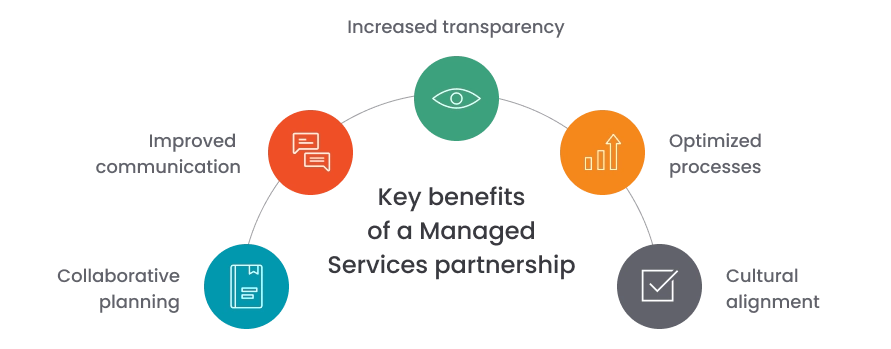
Effective service providers serve as true strategic partners to a company’s procurement team. By gaining a deep understanding of the organization’s needs, goals, and strategies, they can align their service offerings with broader business objectives. As a result, the revamped procurement process not only improves efficiency but also supports strategic goals across the organization.
Furthermore, a strong partnership helps achieve organizational objectives through teamwork, clear communication, transparency, continuous improvement, and shared values. In practice, by executing effectively, external Managed Services partners deliver measurable value—enhancing key processes such as purchasing standards and introducing innovative solutions that drive long-term success.
What are the different types of engagement models?
In the ever-changing world of procurement, customized and bespoke solutions are essential. As organizations grow more complex, flexible engagement models have emerged. These models customize procurement services to match each organization’s specific needs and goals to drive change effectively.
Examples of leading engagement models include:
 Functional design model |
 Ad-hoc resource model |
 Category-based resource model |
|
|
|
What key challenges do managed services providers solve?
Procurement Managed Services providers bring deep market knowledge, access to cutting-edge tools, and well-established industry connections. As a result, they can act as agile partners, quickly addressing complex business processes and operational challenges while enabling organizations to focus on strategic objectives.

Overcoming insufficient capacity
In many organizations, daily transactional activities often take precedence over important strategic initiatives such as category planning. Fortunately, procurement service providers specialize in streamlining these processes efficiently, saving time and enabling companies to meet—and even exceed—critical deadlines. By leveraging a provider’s expertise and tools, organizations can accelerate procurement cycles without sacrificing quality.

Addressing resource constraints
Moreover, procurement services providers optimize the use of available resources, unlocking access to a broader network of suppliers, technologies, and market insights. This expanded capability allows businesses to extend their reach and effectiveness far beyond what they could achieve independently.

Bridging expertise gaps
Procurement Managed Services providers bring specialized knowledge that organizations may not have in-house. For instance, their negotiation skills, market intelligence, and category expertise can be applied immediately to improve upcoming sourcing initiatives and strategic decisions.

Closing talent gaps
Partnering with a procurement service provider allows organizations to quickly address gaps in skills, capacity, or infrastructure. Specifically, Managed Services offer:
-
Innovation: Fresh perspectives and cutting-edge solutions that enhance procurement performance and business value.
-
Expertise: Insights that resolve complex issues and optimize procurement processes.
-
Capacity: Access to top talent to address organizational gaps and seize new opportunities.
-
Transparency: Real-time reporting of KPIs and project progress, increasing visibility and accountability
Critical advantages of managed services: Boosting efficiency and profitability
Implementing a Managed Services strategy delivers more than immediate problem-solving. By partnering with an experienced procurement provider, organizations can drive measurable improvements to efficiency, cost management, and overall business performance.

Improving operational efficiency
Service providers bring best practices, innovation, and process expertise to streamline procurement operations. From automating routine tasks to optimizing supplier relationships, they transform procurement into a lean, agile function. Consequently, organizations can adapt quickly to today’s fast-paced business environment while freeing internal teams to focus on high-value, strategic work.

Reducing financial waste
In addition, leveraging a provider’s strategic knowledge and buying power can reduce costs, improve supplier deals, and minimize errors in procurement. Efficient sourcing and spend management ensure that every dollar contributes to organizational growth—directly enhancing the bottom line.
In summary, partnering with a procurement Managed Services provider delivers a combination of expertise, efficiency, and innovation. By improving processes, reducing waste, and closing critical talent gaps, Managed Services not only streamline procurement but also support long-term growth and maximize ROI across the organization.
Author:

Contributors:
Anirudha Roy Chowdry, Director, ProcureAbility
Nicole Costello, Senior Manager, ProcureAbility
Kathleen M. Pomento, Chief Marketing Officer, ProcureAbility